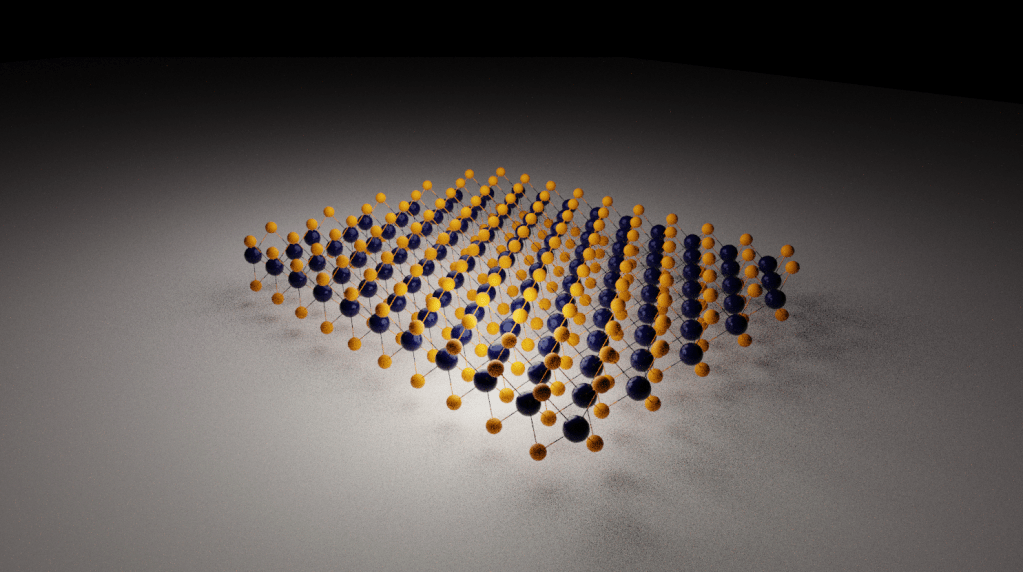

Exciton Optics in TMDs
Transition metal dichalcogenide (TMD) semiconductors, like MoS₂ and WS₂, exhibit rich excitonic physics when exfoliated down to atomically thin layers. A clear hallmark of monolayer TMDs is their strong light emission/absorption in the visible range of the electromagnetic energy spectrum, with stable excitons even up to room temperature. The excitonic properties can be tailor made through chemical composition, stacking of multiple monolayers and precise control of their twist angle. Moreover, one can control the optical response by means of electrical backgates or external magnetic fields. We study these properties by optical spectroscopy methods in strategically designed van der Waals heterostructures.

Collective Exciton Phenoma
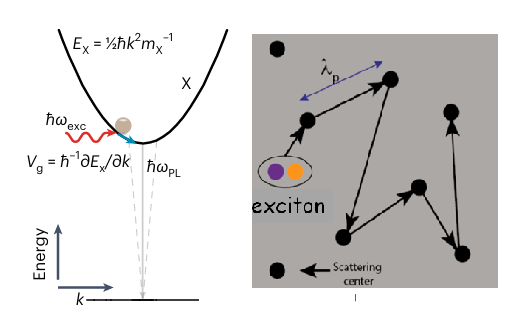
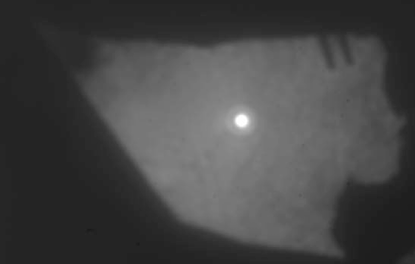
Upon optical excitation, excitons acquire kinetic energy that permits them to propagate throughout a crystal lattice. As they travel, they collide with other objects, like phonons, electrons and other excitons. In traditional semiconductors, exciton transport typically occurs in the diffusive and, in some cases, ballistic regime. In MoS2, exciton–exciton collisions become the dominant scattering mechanism at high densities, giving rise to an unexpected hydrodynamic transport regime. In this phase, excitons exhibit collective behavior, resembling the propagation of a classical fluid. This exciton “fluid” flows over ultralong distances (exceeding 60 μm) at speeds approaching 1.8 × 10⁷ m/s (about 6% of the speed of light). Our mission is to unravel the microscopic nature of collective exciton states in monolayer TMDs.


Exciton-Valley Hall Physics
In monolayer TMDs, excitons obey spin-valley-dependent selection rules, implying that illumination with right- or left-handed circularly polarized laser light can select a particular valley pseudospin. This intrinsic property is called valley-polarization and enables light-induced valley-Hall effects. These optical selection rules enables the directional control of an electrical current flowing in Hall-bar shaped TMD monolayer by using light and without the need for an external magnetic field. Our mission is to unravel the light-induced, or exciton-mediated valley Hall effects.

Exciton Superradiance
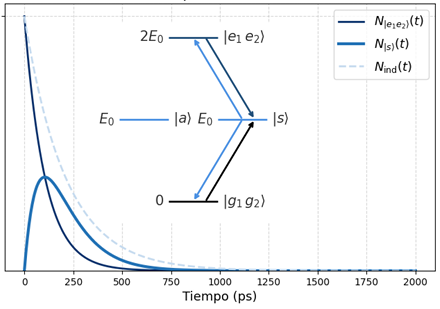
Superradiance (SR) is a quantum optical phenomenon where N-identical emitters, each described by a two-level system, emit light collectively, producing an intense burst of radiation due to shared phase coherence. While well established in atomic systems, its realization in solid-state platforms lags well behind. Semiconductor nanocrystals (NCs), like self-assembled perovskite NCs, have emerged as promising platforms to realize excitonic SR in condensed matter. Our mission is to realize exciton SR and control quantum coherence for advance quantum technologies.
Contact
Reach out to Andres.Granados@uv.es for inquiries, collaborations or academic networking opportunities in exciton, nanophotonics and/or quantum materials research.
 Andres Granados del Aguila Lab